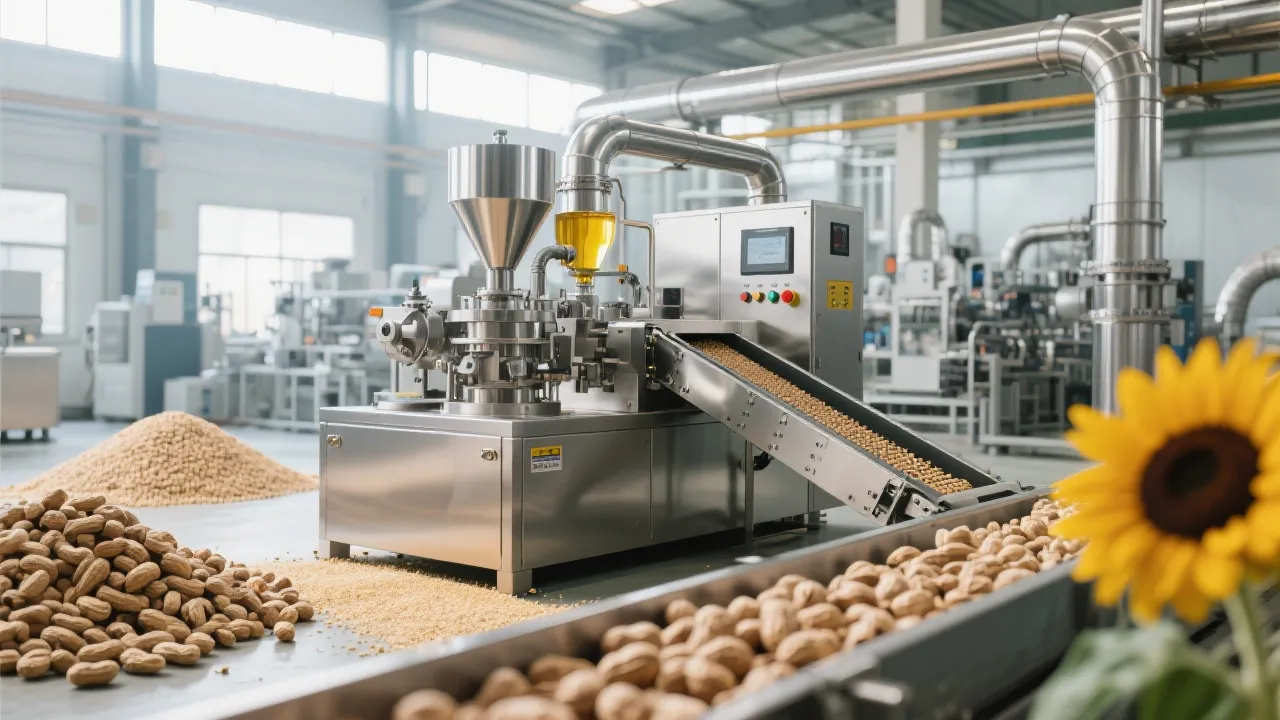
In today’s competitive food and pharmaceutical processing industries, choosing the right soybean oil cold-press screw press machine isn’t just about buying equipment—it’s about optimizing energy use, maximizing yield, and ensuring consistent quality. This guide dives into real-world technical insights that matter most to industrial buyers.
Traditional hydraulic presses often consume 25–30% more electricity than modern spiral designs due to inefficient torque transmission and poor sealing systems. For example, a typical 300 kg/h capacity cold-press machine from 2010 may operate at only 78% efficiency—while newer models with optimized helical shafts and hardened stainless steel components achieve up to 92% efficiency.
💡 Pro Tip: Always ask suppliers for third-party test reports showing actual kWh/kg oil output—not just theoretical specs.
The difference between a durable machine and one that fails within 12 months lies in material selection. High-grade AISI 304/316L stainless steel used in screw shafts and pressing chambers reduces friction, minimizes wear, and prevents contamination—critical for food-grade and pharma applications.
⚠️ Common Mistake: Many users overlook the importance of anti-corrosion coatings on internal parts. Without them, moisture exposure leads to rust buildup—even in dry environments.
A well-designed dual-seal system can increase oil recovery by 5–8%, translating to thousands of dollars saved annually for medium-to-large scale operations. In one case study from a Malaysian soy processor, upgrading from single O-ring seals to a dual-lip mechanical seal increased daily output from 120 kg to 135 kg without additional power input.
Choosing an ISO 9001-certified manufacturer ensures traceability, consistent performance, and reduced downtime. It also signals adherence to global standards for safety, maintenance, and quality control—key factors when sourcing equipment for EU, US, or GCC markets.
Even the best machine underperforms if not operated correctly. Key tips include:
Our engineers have helped over 200 factories across Asia, Europe, and North America optimize their cold-press processes using smart design and precision engineering.
Explore Our Industrial Cold-Press Solutions

.jpg?x-oss-process=image/resize,h_1000,m_lfit/format,webp)