Industrial-grade screw oil presses play a crucial role in the cold-pressing production of soybean oil for the food and pharmaceutical industries. This article delves into the operation techniques and maintenance strategies of these presses, aiming to enhance the stability of food-grade oil production and promote efficient and sustainable large-scale industrial production.
The cold-pressing process of soybean oil using industrial-grade screw oil presses is based on the principle of applying mechanical pressure to extract oil from soybeans without heating. This method helps preserve the natural nutrients and flavors of the oil, making it suitable for food and pharmaceutical applications. The process typically involves several key steps, including cleaning, grinding, and pressing.
During the cold-pressing process, the screw shaft rotates within the pressing chamber, gradually compressing the soybeans and forcing the oil out. The speed of the screw shaft, the pressure in the pressing chamber, and the particle size of the feedstock are all critical factors that affect the oil yield and quality. By adjusting these parameters, operators can optimize the cold-pressing process and achieve higher oil yields and better oil quality.
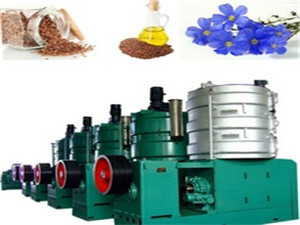
To improve the oil yield and quality, several key operation methods can be employed. Firstly, adjusting the feed rate and particle size of the soybeans can significantly impact the pressing efficiency. Finer particles generally result in higher oil yields, but they may also increase the risk of clogging the pressing chamber. Therefore, it is essential to find the optimal particle size for the specific oil press and feedstock.
Secondly, controlling the speed of the screw shaft and the pressure in the pressing chamber is crucial. A higher screw shaft speed can increase the pressing force and extraction efficiency, but it may also generate more heat and damage the oil quality. On the other hand, maintaining an appropriate pressure in the pressing chamber can ensure a continuous and stable oil extraction process.
Finally, regular inspection and adjustment of the pressing chamber and screw shaft are necessary to ensure their proper functioning. Any wear or damage to these components can lead to reduced oil yields and poor oil quality. By replacing worn parts in a timely manner, operators can maintain the performance of the oil press and extend its service life.
Proper installation and commissioning of industrial-grade screw oil presses are essential for their safe and efficient operation. Before installation, it is important to ensure that the installation site meets the requirements of the oil press, including proper ventilation, power supply, and floor loading capacity. During the installation process, operators should follow the manufacturer's instructions carefully and ensure that all components are installed correctly.
Once the oil press is installed, it is necessary to conduct a comprehensive commissioning process to ensure that it is operating properly. This includes checking the electrical connections, mechanical components, and hydraulic systems. After commissioning, regular daily maintenance is crucial to prevent failures and extend the service life of the oil press. Maintenance tasks may include cleaning, lubrication, and inspection of the components.
Regular maintenance can help identify potential problems early and prevent them from escalating into major failures. By following a regular maintenance schedule, operators can reduce the risk of downtime and production losses, as well as improve the overall reliability and performance of the oil press.
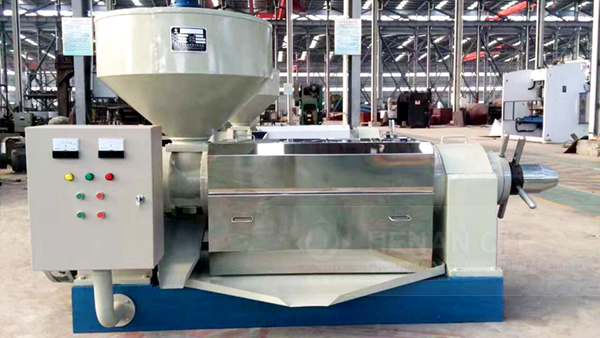
To illustrate the importance of proper operation and maintenance of industrial-grade screw oil presses, several case studies can be introduced. These case studies can analyze the impact of different parameters, such as screw shaft speed, pressing chamber pressure, and feedstock particle size, on the oil quality and yield. By comparing the results of different case studies, operators can gain a better understanding of the optimal operating conditions for their specific oil presses.
For example, a case study may show that increasing the screw shaft speed by a certain amount can significantly increase the oil yield, but it may also result in a slight decrease in the oil quality. Another case study may demonstrate that adjusting the feedstock particle size can improve the oil yield and quality simultaneously. These case studies can provide valuable insights and practical guidance for operators to optimize their cold-pressing processes.
In conclusion, industrial-grade screw oil presses are essential equipment for the cold-pressing production of soybean oil in the food and pharmaceutical industries. By understanding the cold-pressing principle and process, employing key operation methods, and implementing proper installation, commissioning, and daily maintenance strategies, operators can improve the oil yield and quality, prevent failures, and extend the service life of the oil presses.
If you are interested in learning more about the operation and maintenance of industrial-grade screw oil presses, or if you have any questions or need further assistance, click here to get a detailed operation manual.
.jpg?x-oss-process=image/resize,h_1000,m_lfit/format,webp)