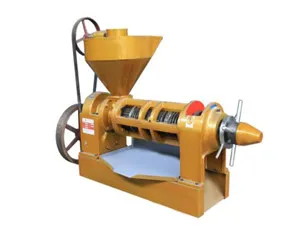

In the food and medicine industries, the demand for high - quality, pure oils is ever - increasing. Cold pressing has emerged as the preferred oil extraction method. Unlike hot pressing, cold pressing is carried out at a temperature below 60°C. This low - temperature process helps to preserve the natural nutrients, flavors, and antioxidants in the oil. For instance, in the production of soybean oil for food use, cold - pressed soybean oil retains more vitamin E and unsaturated fatty acids, which are beneficial for human health. In the pharmaceutical industry, the high purity of cold - pressed oils meets the strict standards for medicinal raw materials. According to industry research, cold - pressed oils can retain up to 90% of the original nutrients in the raw materials, compared to only about 60% in hot - pressed oils.

The spiral shaft is a crucial part of the spiral oil press. Its rotation speed and pitch directly affect the pressing process. A well - designed spiral shaft can ensure a uniform and continuous pressing force on the soybeans. If the rotation speed is too fast, the soybeans may not be pressed thoroughly, resulting in a lower oil yield. On the other hand, if it is too slow, the production efficiency will be reduced. Studies have shown that an optimal rotation speed of the spiral shaft for cold - pressing soybean oil is around 10 - 15 revolutions per minute, which can balance the oil yield and production efficiency.
The pressing chamber provides the space for the oil extraction process. The pressure inside the pressing chamber is a key factor affecting the oil quality and yield. By adjusting the internal structure of the pressing chamber, such as the gap between the spiral shaft and the chamber wall, the pressure can be controlled. A proper pressure can ensure that the oil is squeezed out smoothly while maintaining the stability of the oil quality. Generally, for cold - pressing soybean oil, a pressure of 2 - 3 MPa in the pressing chamber can achieve a good oil - extraction effect.
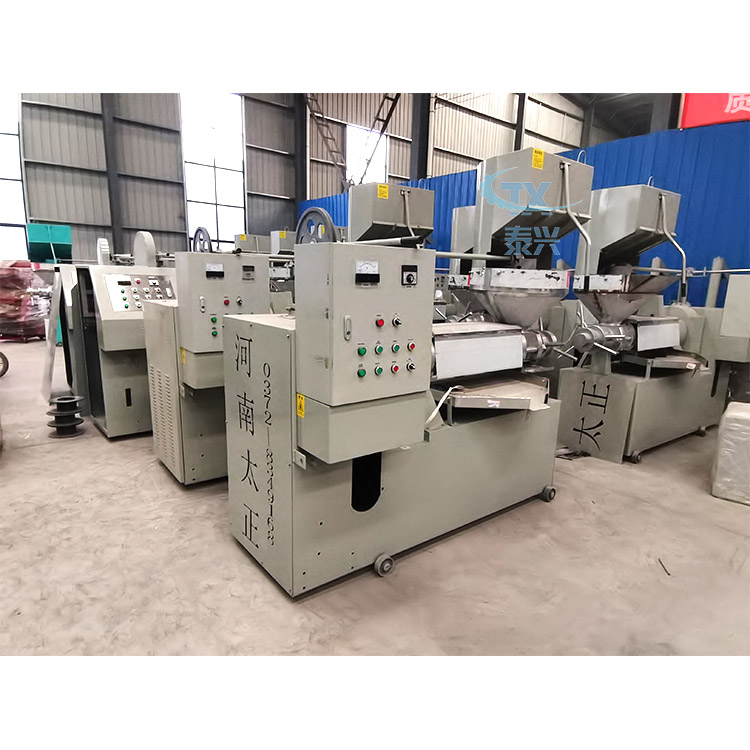
As mentioned above, adjusting the rotation speed of the spiral shaft is essential. Operators should monitor the production process and adjust the speed according to the type and moisture content of the soybeans. For soybeans with higher moisture content, a slightly lower speed may be required to ensure thorough pressing.
The feed rate and particle size of the soybeans also affect the oil - extraction process. The feed rate should be uniform to avoid over - loading or under - loading the oil press. The particle size of the soybeans should be appropriate. If the particles are too large, they may not be pressed effectively; if they are too small, they may block the oil - outlet channels. A particle size of about 2 - 3 mm is recommended for cold - pressing soybean oil.
Maintaining a low temperature during the cold - pressing process is crucial. Cooling systems can be installed in the oil press to control the temperature. The temperature should be kept below 60°C to ensure the quality of the cold - pressed oil.
In a real - world case, a soybean oil production plant optimized the parameters of their industrial spiral oil press. By adjusting the rotation speed of the spiral shaft to 12 revolutions per minute, controlling the pressure in the pressing chamber at 2.5 MPa, and ensuring a uniform feed rate and appropriate particle size of the soybeans, they increased the oil yield from 18% to 22%. This shows that through parameter optimization, significant improvements in oil yield can be achieved.
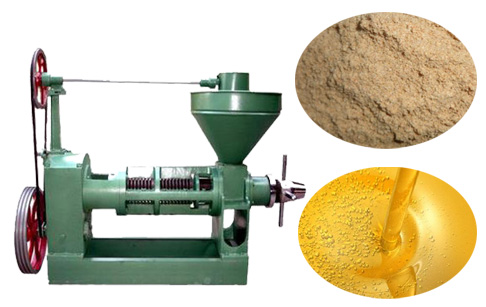
Regular maintenance of the industrial spiral oil press is essential to ensure its long - term stable operation. Cleaning the oil press after each use can prevent the accumulation of oil residues and impurities, which may affect the oil quality. Abnormal alarm systems should be checked regularly to detect and solve problems in time. Bearing lubrication and replacement are also important for the smooth operation of the oil press. By following these maintenance measures, the service life of the oil press can be extended, and the production efficiency can be improved.
Are you interested in learning more about industrial cold - pressing technology? Click here to get the PDF of Industrial Cold - Pressing Operation Manual and master the most advanced cold - pressing operation solutions!




.jpg?x-oss-process=image/resize,h_1000,m_lfit/format,webp)